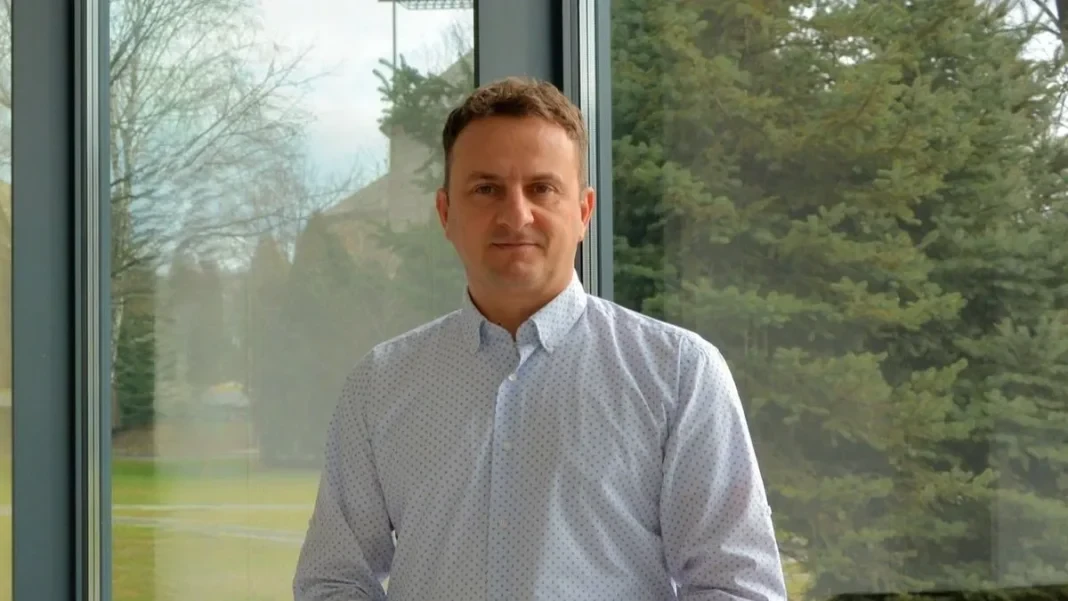
Air pollution continues to be one of the most serious public health challenges in Bosnia and Herzegovina, with long-term consequences for the health of the population, especially in urban areas. On this topic, Prof. Dr. Nedžad Haračić, a long-time expert in the field of air quality control and a new member of BHAAAS, spoke for Hayat TV.
Prof. Haračić highlights that two key contributors to air pollution in Bosnia and Herzegovina are traffic and individual heating systems. The large number of old vehicles, predominantly running on fossil fuels, along with insufficiently developed and electrified public urban transport, particularly in Sarajevo, significantly contribute to the emission of harmful gases and particulate matter. Simultaneously, individual heating systems that use coal, often of low quality with a high sulfur and ash content, further worsen air quality during the winter months.
A special problem is posed by the geographical characteristics of cities like Sarajevo, Kakanj, and Maglaj, where temperature inversions are frequent during the winter period. These lead to the trapping of pollutants in the lower layers of the atmosphere, with the occurrence of fog and smog that directly threatens public health. Prof. Haračić emphasizes that the pollution issue cannot be viewed in isolation and that it is necessary to clearly define priorities, causes, and measures that can bring measurable improvements.
The key solution, according to him, is the energy transition process, including co-financing the replacement of individual heating systems that use solid fuels and gradually reducing coal usage. In this context, Prof. Haračić also recalls the introduction of the CBAM mechanism, which will further impact the energy sector and electricity prices but will also accelerate the transition to cleaner energy sources.
These important issues will also be discussed at the upcoming 17th BHAAAS Days through the activities of the Department of Technical and Natural Sciences, where scientific and professional dialogue will address the causes of air pollution, its consequences, and sustainable solutions to improve the quality of life in Bosnia and Herzegovina.